
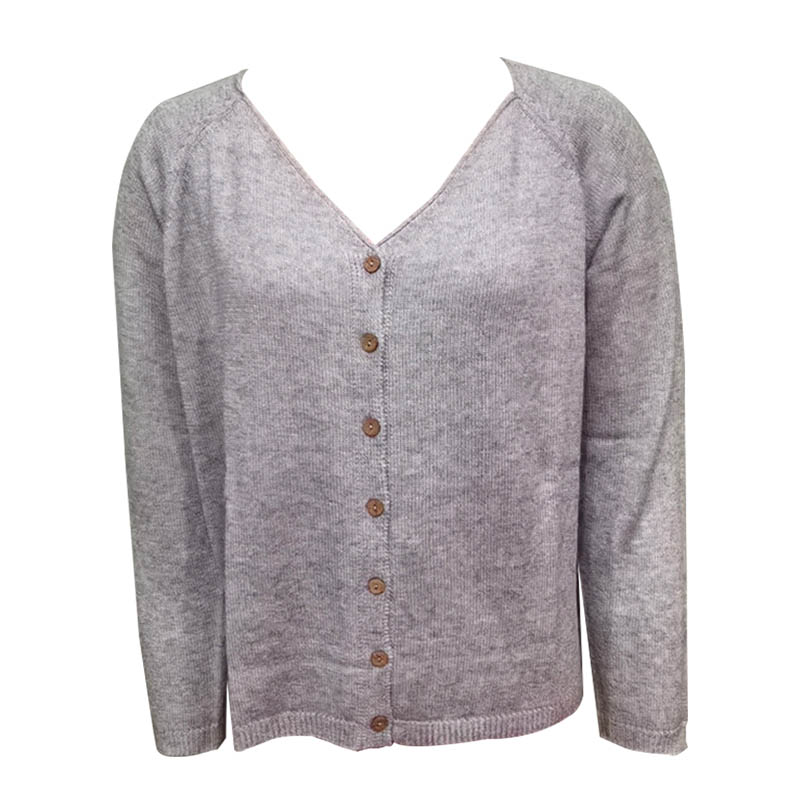
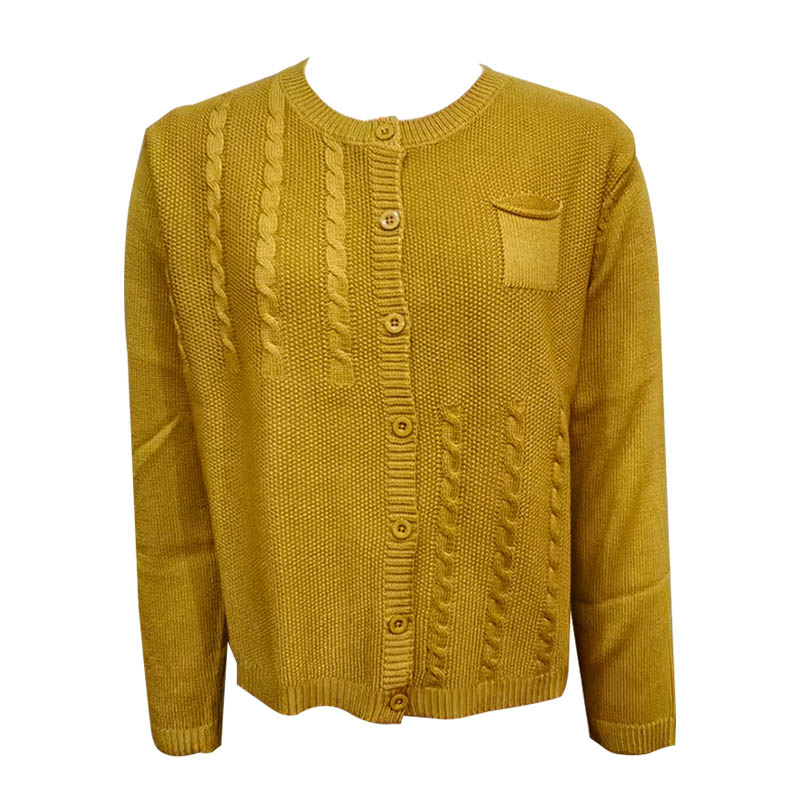
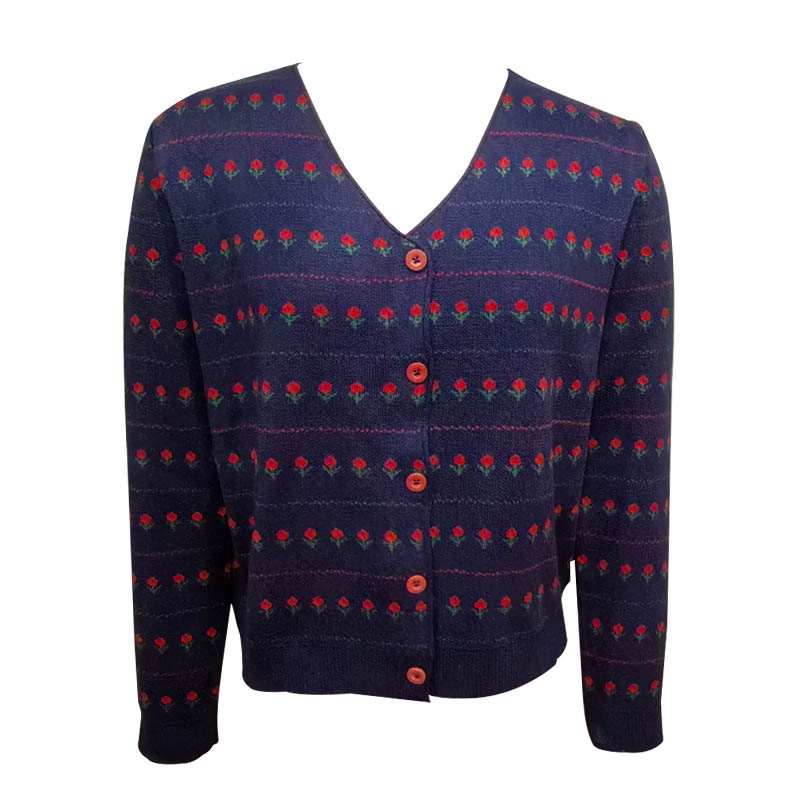
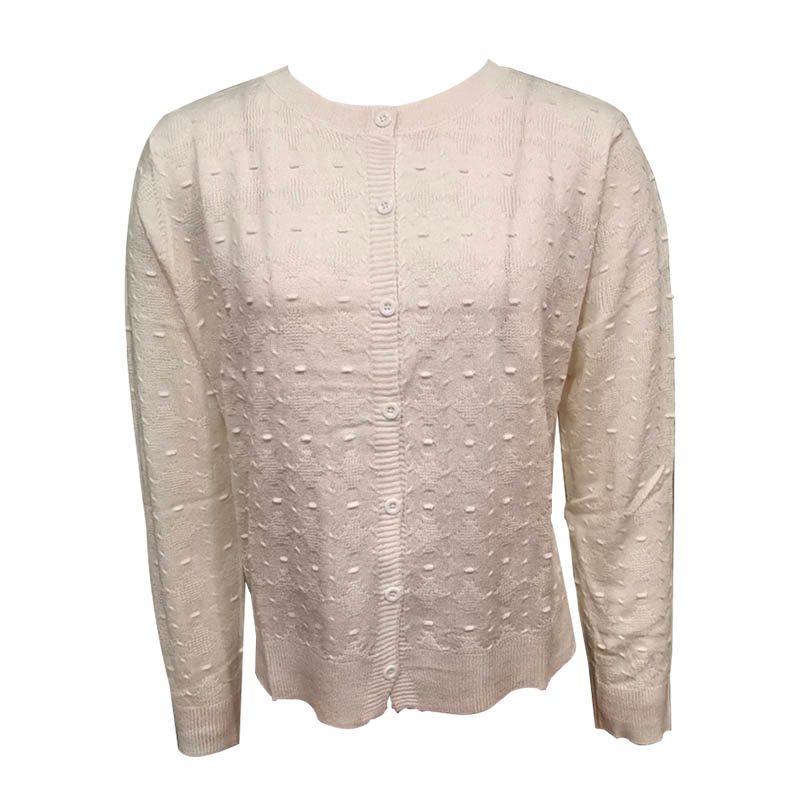


How comfortable does knitted cardigan remain after prolonged wear, maintaining its soft, skin-friendly feel?
Release Time : 2026-02-19
In modern apparel consumption, comfort and durability are both essential. Knitted cardigan, with its unique coil structure, has become a core choice for high-comfort scenarios such as loungewear, underwear, casual wear, and close-fitting garments. It not only provides a soft touch upon initial wear but also maintains its skin-friendly feel and shape even after prolonged and frequent wear.
1. Fiber Selection: Laying the Foundation for Softness and Skin-Friendliness
The comfort of knitted cardigan depends first and foremost on the quality of its fibers. Natural fibers such as cotton, wool, and silk inherently possess excellent skin-friendliness and moisture-wicking breathability. Long-staple cotton fibers, exceeding 35 millimeters in length, have a smooth surface with minimal fuzz, resulting in a delicate feel and resistance to pilling when woven into fabric. Modal, lyocell, and other regenerated cellulose fibers have regular molecular structures, a smooth drape, and do not cause roughness upon prolonged skin contact. High-end knitwear often uses blends of various fibers, such as cotton-spandex blends to increase elasticity, and wool-silk blends to enhance warmth and luster, achieving an optimal balance between softness and functionality. High-quality fibers undergo combing to remove short fibers and impurities, ensuring the fabric's smoothness from the source, maintaining its initial softness even after more than 8 hours of continuous wear.
2. Knitting Technology: Loop Structure Determines Lasting Comfort
The essential difference between knitted cardigan and woven fabrics lies in their loop structure. Each yarn interlocks in a continuous loop, forming an elastic mesh. This structure allows the fabric to stretch moderately under stress and rebound quickly after release, preventing permanent deformation from prolonged stretching. High-count, high-density knitting technology makes the loops finer and more uniform, resulting in a smooth, non-grained surface and reducing friction points against the skin. The double-knit structure creates a smooth surface on both sides, providing a consistently comfortable experience regardless of which side touches the skin. More importantly, high-quality knitting processes control the consistency of loop tension, avoiding discomfort caused by localized excessive tightness or looseness. This ensures even pressure distribution across the shoulders, chest, waist, and arms, preventing marks or pressure even after prolonged wear.
3. Finishing Techniques: A Key Process for Locking in Softness
The finishing processes after fabric weaving have a profound impact on the durability of comfort. Bio-enzyme polishing removes fine fuzz from the fabric surface, resulting in a smoother feel and reducing pilling after washing. Softener finishing forms a protective film on the fiber surface, reducing the coefficient of friction between fibers and keeping the fabric fluffy and soft. High-end brands also use silicone oil finishing or nano-softening technology, which offer excellent wash resistance, maintaining over 70% of their initial softness after 30 to 50 washes. Furthermore, pre-shrinking eliminates internal stress in the fabric, preventing tightness caused by fabric shrinkage during wear and ensuring long-term consistency in dimensional stability and comfort.
4. Care and Maintenance: The User's Responsibility to Extend Comfort Lifespan
Even the finest knitted cardigan requires proper care to maintain its long-lasting comfort. Washing in cold water or lukewarm water below 30 degrees Celsius avoids heat damage to the fibers, preserving elasticity and softness. Use a neutral detergent to avoid excessive alkalinity that could damage the fiber structure. Turning the garment inside out during washing and placing it in a laundry bag reduces pilling and deformation caused by surface friction. Laying it flat to air dry is better than tumble drying, preventing heat from hardening and brittlening the fibers.
In conclusion, the soft, skin-friendly feel of knitted cardigan is not a one-time experience, but a lasting performance achieved through four guarantees: high-quality fibers, precise weaving, scientific finishing, and proper care. For users who value quality of life, choosing and treating a good knitted garment well means continuously enjoying cloud-like softness and comfort for hundreds of hours of wear. This is not just a clothing choice, but a long-term investment in everyday comfort.
1. Fiber Selection: Laying the Foundation for Softness and Skin-Friendliness
The comfort of knitted cardigan depends first and foremost on the quality of its fibers. Natural fibers such as cotton, wool, and silk inherently possess excellent skin-friendliness and moisture-wicking breathability. Long-staple cotton fibers, exceeding 35 millimeters in length, have a smooth surface with minimal fuzz, resulting in a delicate feel and resistance to pilling when woven into fabric. Modal, lyocell, and other regenerated cellulose fibers have regular molecular structures, a smooth drape, and do not cause roughness upon prolonged skin contact. High-end knitwear often uses blends of various fibers, such as cotton-spandex blends to increase elasticity, and wool-silk blends to enhance warmth and luster, achieving an optimal balance between softness and functionality. High-quality fibers undergo combing to remove short fibers and impurities, ensuring the fabric's smoothness from the source, maintaining its initial softness even after more than 8 hours of continuous wear.
2. Knitting Technology: Loop Structure Determines Lasting Comfort
The essential difference between knitted cardigan and woven fabrics lies in their loop structure. Each yarn interlocks in a continuous loop, forming an elastic mesh. This structure allows the fabric to stretch moderately under stress and rebound quickly after release, preventing permanent deformation from prolonged stretching. High-count, high-density knitting technology makes the loops finer and more uniform, resulting in a smooth, non-grained surface and reducing friction points against the skin. The double-knit structure creates a smooth surface on both sides, providing a consistently comfortable experience regardless of which side touches the skin. More importantly, high-quality knitting processes control the consistency of loop tension, avoiding discomfort caused by localized excessive tightness or looseness. This ensures even pressure distribution across the shoulders, chest, waist, and arms, preventing marks or pressure even after prolonged wear.
3. Finishing Techniques: A Key Process for Locking in Softness
The finishing processes after fabric weaving have a profound impact on the durability of comfort. Bio-enzyme polishing removes fine fuzz from the fabric surface, resulting in a smoother feel and reducing pilling after washing. Softener finishing forms a protective film on the fiber surface, reducing the coefficient of friction between fibers and keeping the fabric fluffy and soft. High-end brands also use silicone oil finishing or nano-softening technology, which offer excellent wash resistance, maintaining over 70% of their initial softness after 30 to 50 washes. Furthermore, pre-shrinking eliminates internal stress in the fabric, preventing tightness caused by fabric shrinkage during wear and ensuring long-term consistency in dimensional stability and comfort.
4. Care and Maintenance: The User's Responsibility to Extend Comfort Lifespan
Even the finest knitted cardigan requires proper care to maintain its long-lasting comfort. Washing in cold water or lukewarm water below 30 degrees Celsius avoids heat damage to the fibers, preserving elasticity and softness. Use a neutral detergent to avoid excessive alkalinity that could damage the fiber structure. Turning the garment inside out during washing and placing it in a laundry bag reduces pilling and deformation caused by surface friction. Laying it flat to air dry is better than tumble drying, preventing heat from hardening and brittlening the fibers.
In conclusion, the soft, skin-friendly feel of knitted cardigan is not a one-time experience, but a lasting performance achieved through four guarantees: high-quality fibers, precise weaving, scientific finishing, and proper care. For users who value quality of life, choosing and treating a good knitted garment well means continuously enjoying cloud-like softness and comfort for hundreds of hours of wear. This is not just a clothing choice, but a long-term investment in everyday comfort.