
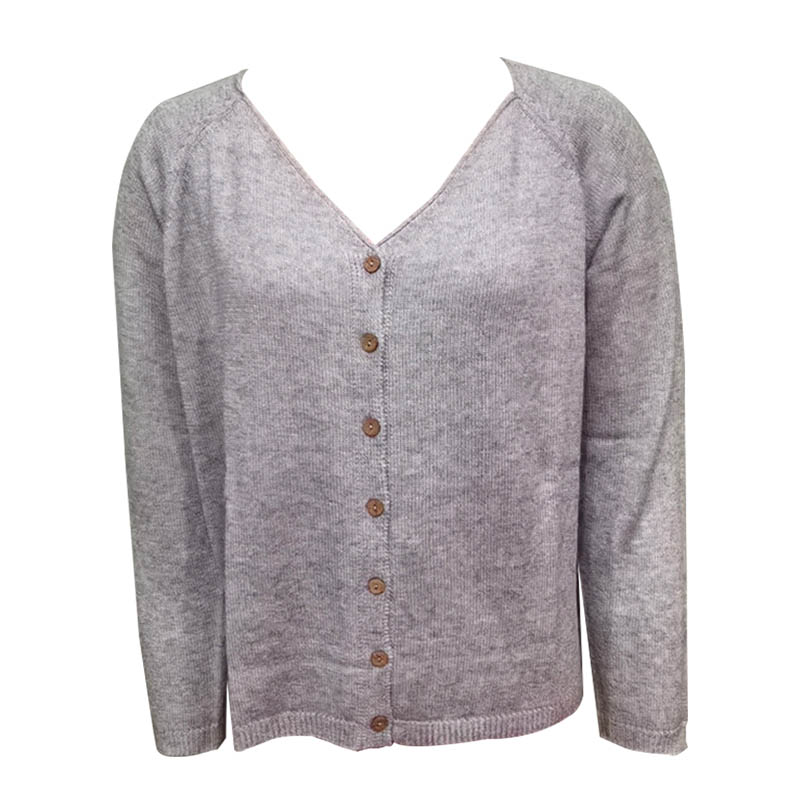
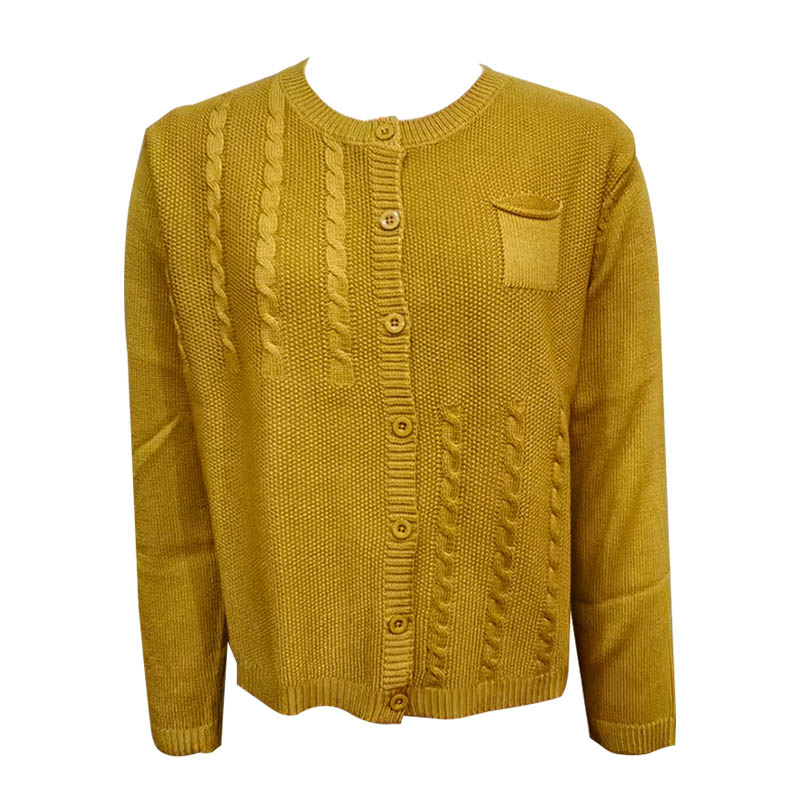
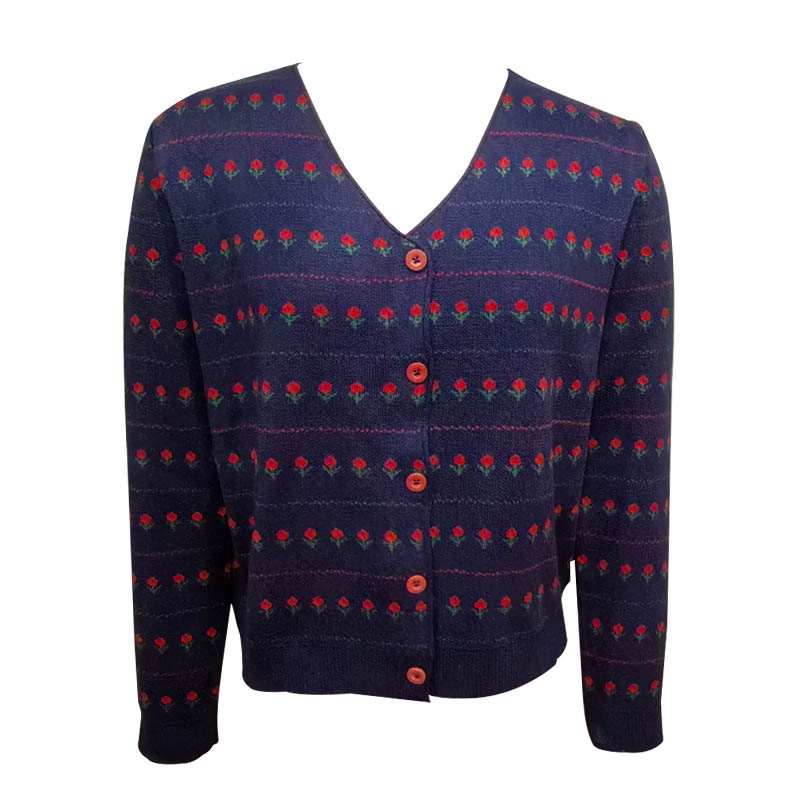
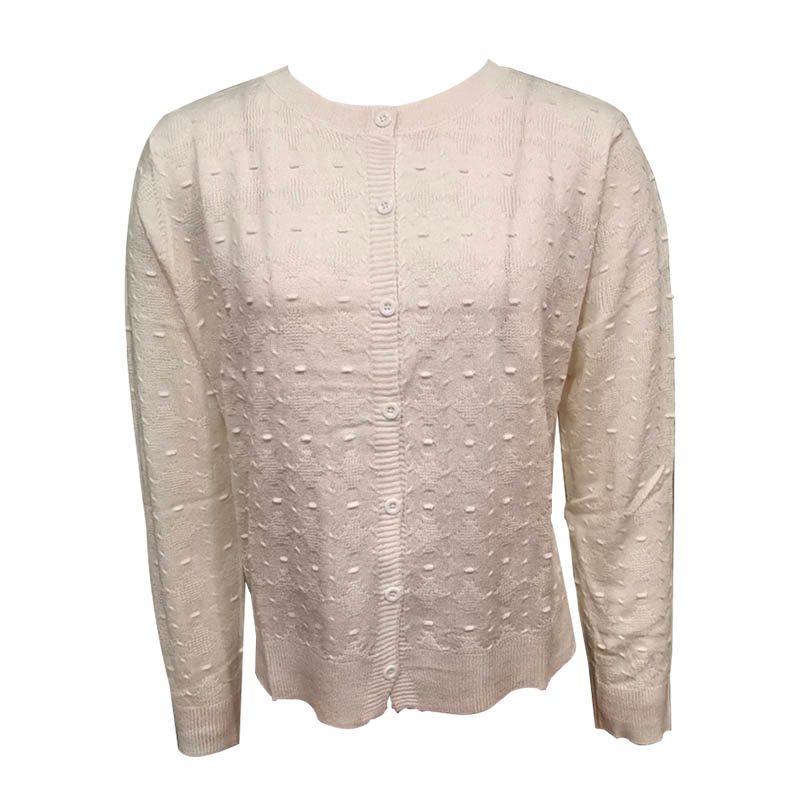


What are the natural advantages of knitted cardigan in terms of breathability and temperature regulation?
Release Time : 2025-12-01
In today's fast-paced life, people's needs for clothing have long surpassed simple covering and aesthetics, shifting towards comfort, health, and environmental adaptability. As a classic and timeless garment, knitted cardigan, with its unique weaving structure and natural fiber properties, demonstrates significant advantages in breathability and temperature regulation, making it an ideal choice for spring, autumn, and even air-conditioned environments. This "breathable" clothing not only conforms to ergonomics but also responds to the deep-seated need for microclimate comfort with natural wisdom.
1. Open-loop coil structure: A natural "micro-ventilation system"
The core difference between knitted fabrics and woven fabrics lies in their "interlocking coil" structure. Tiny pores exist between each coil, forming countless interconnected air channels. This open three-dimensional network structure is like building a micro-ventilation system for the body—when the body generates heat and moisture, water vapor can quickly diffuse outwards through the pores; simultaneously, fresh external air can freely flow in, achieving continuous gas exchange. In contrast, woven fabrics have a tighter structure, limiting breathability. Therefore, even with the same material, knitted cardigans are typically 30% more breathable, effectively preventing stuffiness and stickiness, making them especially suitable for long hours at work, commuting, or light outdoor activities.
2. Natural Fiber Support: Balance of Moisture Absorption, Release, and Temperature
High-quality knitted cardigans are often made from cotton, wool, cashmere, linen, or blends of natural fibers. These materials inherently possess excellent moisture-wicking and heat-cushioning capabilities. For example, merino wool fibers are covered with a scaly layer on the surface and contain numerous hydrophilic groups internally. This allows them to absorb up to 30% of their own weight in moisture when humidity is high without feeling damp, and release moisture when the environment is dry, maintaining a stable skin microenvironment. While cotton fibers are highly absorbent, they dry relatively slowly; modern processes often blend cotton with small amounts of regenerated cellulose or elastic fibers, retaining softness and skin-friendliness while improving quick-drying performance. Cashmere, with its ultra-fine fibers and hollow structure, forms a layer of still air, providing warmth in winter and coolness in summer, achieving bidirectional temperature regulation.
3. Structural Elasticity Facilitates Dynamic Air Layer Regulation
Another hidden advantage of knitted cardigan lies in its horizontal and vertical elasticity. When the body moves, the fabric stretches slightly with the limbs, temporarily expanding the pores and accelerating airflow; when at rest, it returns to its original shape, retaining a suitable layer of still air for insulation. This "dynamic breathing" mechanism allows the cardigan to automatically adjust its heat and moisture transfer efficiency according to the wearing status. Furthermore, the open-front design itself enhances the freedom of adjustment—buttoning it up for warmth when cold and leaving it open for ventilation when hot, it can cope with indoor and outdoor temperature differences or sudden weather changes without needing to change clothes, greatly improving the flexibility and comfort of wearing it.
4. Lightweight and Layered: A Stylish Solution for Intelligent Temperature Control
Knitted cardigan is typically lightweight and of moderate thickness, making it easy to wear alone or layered with other items. In the "onion layering" method, the cardigan plays the ideal middle layer role: the inner layer wicks away sweat, the outer layer protects against wind, and the cardigan mediates the balance of temperature and humidity. For example, pairing it with a T-shirt in an air-conditioned room provides soft warmth; adding a cardigan in the early mornings and evenings of spring and autumn wards off the chill without looking bulky. This modular dressing logic makes a cardigan a year-round "climate regulator," balancing function and style.
The breathability and temperature control advantages of knitted cardigans do not rely on high-tech coatings or complex devices, but rather stem from the inherent wisdom of the fabric structure and natural materials. It softly wraps the body and responds to the environment with breathability, rekindling people's understanding of "comfort is luxury" in an era of rampant fast fashion. Whether at home, in the office, or strolling the street, a high-quality knitted cardigan allows one to unconsciously feel the rhythm of nature and enjoy that perfect sense of freedom and ease.
1. Open-loop coil structure: A natural "micro-ventilation system"
The core difference between knitted fabrics and woven fabrics lies in their "interlocking coil" structure. Tiny pores exist between each coil, forming countless interconnected air channels. This open three-dimensional network structure is like building a micro-ventilation system for the body—when the body generates heat and moisture, water vapor can quickly diffuse outwards through the pores; simultaneously, fresh external air can freely flow in, achieving continuous gas exchange. In contrast, woven fabrics have a tighter structure, limiting breathability. Therefore, even with the same material, knitted cardigans are typically 30% more breathable, effectively preventing stuffiness and stickiness, making them especially suitable for long hours at work, commuting, or light outdoor activities.
2. Natural Fiber Support: Balance of Moisture Absorption, Release, and Temperature
High-quality knitted cardigans are often made from cotton, wool, cashmere, linen, or blends of natural fibers. These materials inherently possess excellent moisture-wicking and heat-cushioning capabilities. For example, merino wool fibers are covered with a scaly layer on the surface and contain numerous hydrophilic groups internally. This allows them to absorb up to 30% of their own weight in moisture when humidity is high without feeling damp, and release moisture when the environment is dry, maintaining a stable skin microenvironment. While cotton fibers are highly absorbent, they dry relatively slowly; modern processes often blend cotton with small amounts of regenerated cellulose or elastic fibers, retaining softness and skin-friendliness while improving quick-drying performance. Cashmere, with its ultra-fine fibers and hollow structure, forms a layer of still air, providing warmth in winter and coolness in summer, achieving bidirectional temperature regulation.
3. Structural Elasticity Facilitates Dynamic Air Layer Regulation
Another hidden advantage of knitted cardigan lies in its horizontal and vertical elasticity. When the body moves, the fabric stretches slightly with the limbs, temporarily expanding the pores and accelerating airflow; when at rest, it returns to its original shape, retaining a suitable layer of still air for insulation. This "dynamic breathing" mechanism allows the cardigan to automatically adjust its heat and moisture transfer efficiency according to the wearing status. Furthermore, the open-front design itself enhances the freedom of adjustment—buttoning it up for warmth when cold and leaving it open for ventilation when hot, it can cope with indoor and outdoor temperature differences or sudden weather changes without needing to change clothes, greatly improving the flexibility and comfort of wearing it.
4. Lightweight and Layered: A Stylish Solution for Intelligent Temperature Control
Knitted cardigan is typically lightweight and of moderate thickness, making it easy to wear alone or layered with other items. In the "onion layering" method, the cardigan plays the ideal middle layer role: the inner layer wicks away sweat, the outer layer protects against wind, and the cardigan mediates the balance of temperature and humidity. For example, pairing it with a T-shirt in an air-conditioned room provides soft warmth; adding a cardigan in the early mornings and evenings of spring and autumn wards off the chill without looking bulky. This modular dressing logic makes a cardigan a year-round "climate regulator," balancing function and style.
The breathability and temperature control advantages of knitted cardigans do not rely on high-tech coatings or complex devices, but rather stem from the inherent wisdom of the fabric structure and natural materials. It softly wraps the body and responds to the environment with breathability, rekindling people's understanding of "comfort is luxury" in an era of rampant fast fashion. Whether at home, in the office, or strolling the street, a high-quality knitted cardigan allows one to unconsciously feel the rhythm of nature and enjoy that perfect sense of freedom and ease.