
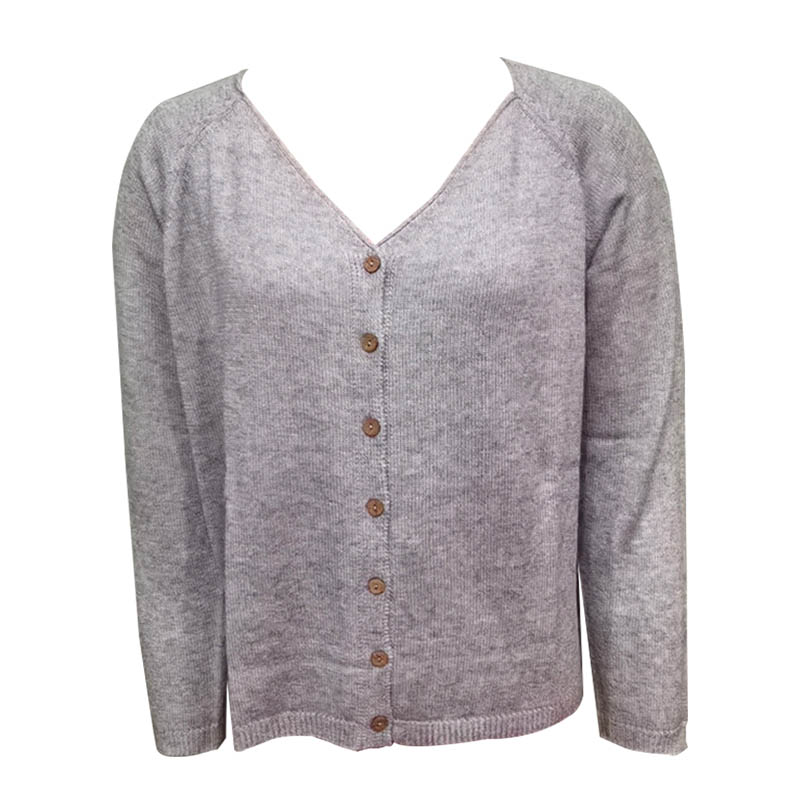
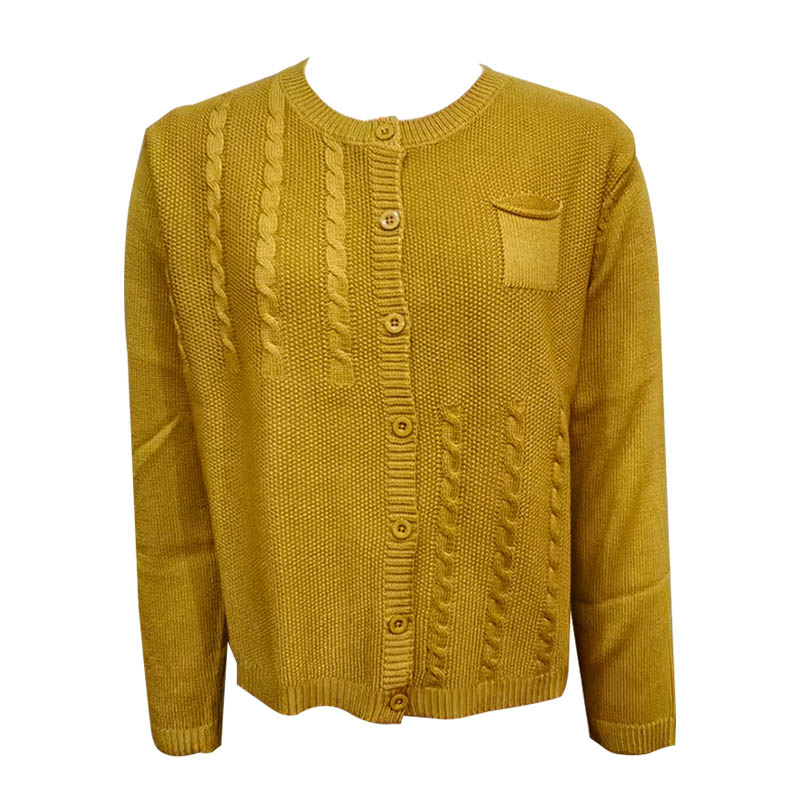
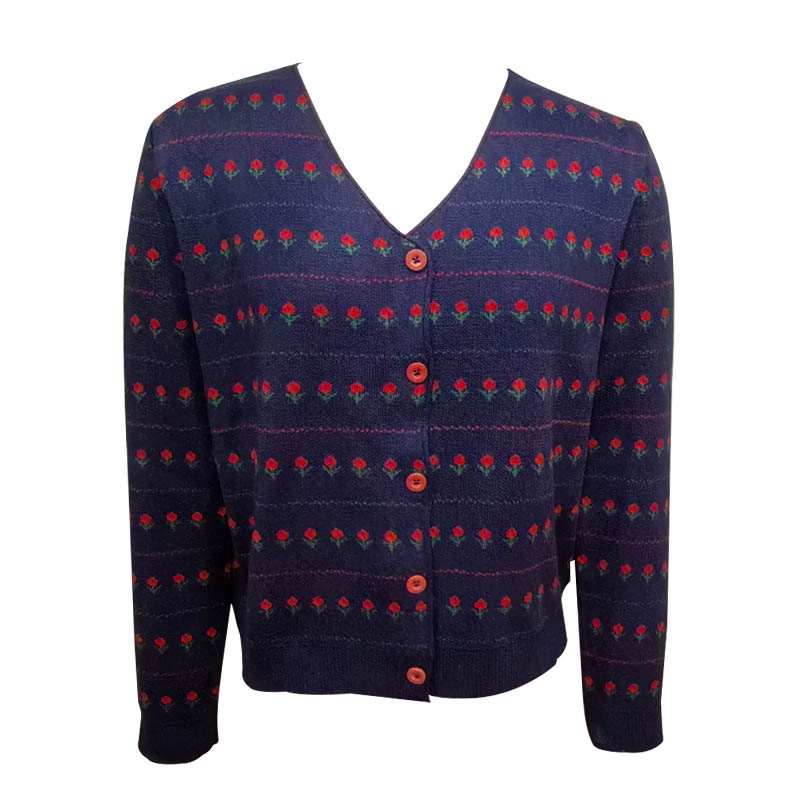
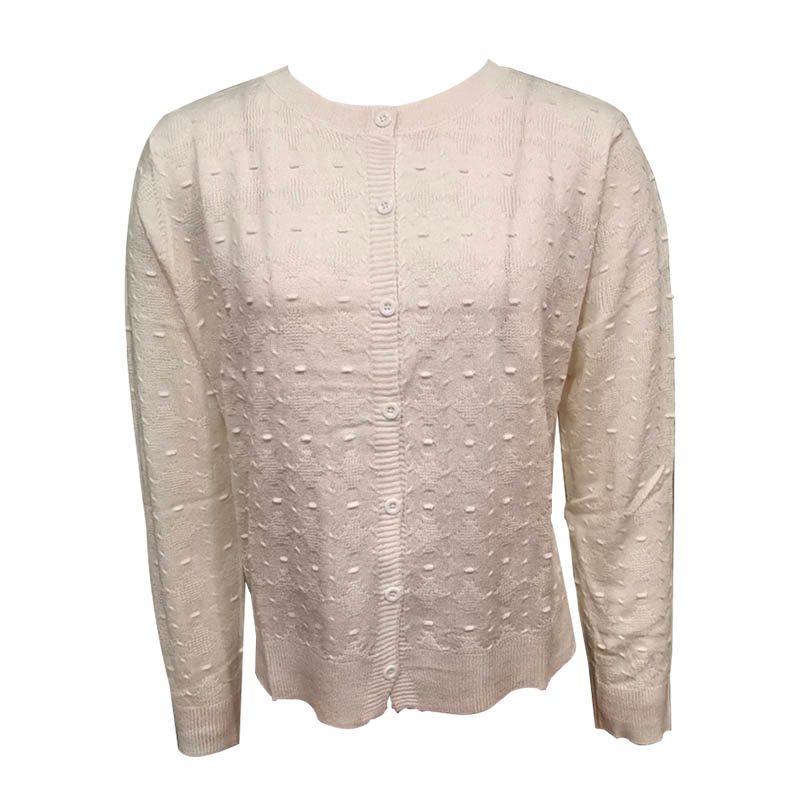


Does knitted cardigan possess anti-pilling and shape-retaining properties?
Release Time : 2025-12-12
In everyday wear, the charm of a knitted cardigan lies not only in its soft touch and casual silhouette, but also in its ability to withstand the test of time and life. However, many people often encounter the following problems during use: small pills gradually appear on the cuffs, front, or hem, or the garment becomes loose and deformed after multiple washes, losing its original crispness and shape. Therefore, whether a knitted cardigan possesses good anti-pilling and shape-retaining properties directly determines whether it can evolve from a "flash in the pan" to a "long-lasting companion."
Anti-pilling ability is essentially a comprehensive reflection of yarn quality and weaving technology. Pilling originates from fibers breaking, tangling, and forming small balls under friction. High-quality knitted cardigans typically use high-count combed yarns or specially treated blended fibers. The combing process effectively removes short fibers and impurities, making the yarn structure denser and the surface smoother, thus significantly reducing fiber shedding during friction. Some high-end products also incorporate a small amount of anti-pilling modified fibers or use a tightly knitted structure (such as double-sided jacquard or rib knit) to allow the loops to support each other and prevent them from being pulled out by external forces. This allows the surface to remain clean and smooth for a long time, even in areas with repeated friction from backpack straps or frequent arm movements.
Shape retention is crucial to the stability of the cardigan's overall structure. This depends not only on the resilience of the yarn itself but also on the fabric density, finishing processes, and pattern design. High-density knit structures effectively resist stretching and deformation, while proper heat setting helps the fibers "remember" their original shape, allowing them to quickly recover their original form even after machine washing or folding. Furthermore, key areas such as the shoulder line, armholes, and hem often use rib knit or reinforced weaves to enhance elasticity and prevent sagging. Some brands that pay attention to detail also add lightweight lining strips or use overlock stitching at the internal seams to further enhance overall structural stability.
It's important to note that anti-pilling and shape retention do not come at the expense of softness. Modern textile technology has achieved a balance between softness and resilience—fabrics remain skin-friendly and breathable, yet are no longer delicate and easily damaged. This advancement allows knitted cardigans to satisfy the pursuit of comfort while being suitable for diverse scenarios such as daily commutes, business trips, and even light outdoor activities.
From a consumer experience perspective, these two properties directly impact care costs and psychological well-being. A cardigan that doesn't pill or deform requires no frequent washing or careful hand washing; it can be restored to its original condition after machine washing and drying, greatly lowering the barrier to use. More importantly, it maintains a presentable appearance, conveying a relaxed and unhurried lifestyle whether paired with a shirt for semi-formal occasions or worn casually under a T-shirt.
On a deeper level, anti-pilling and shape-retaining properties also resonate with the contemporary concept of sustainable fashion. When clothing can be worn longer and maintain its best condition, the likelihood of it being discarded due to "old" or "deformed" is reduced, extending the product's life cycle and reducing resource waste. This is not only a commitment to quality but also a responsibility to the environment.
In conclusion, the anti-pilling and shape-retaining properties of knitted cardigans are not merely a matter of piling on technical specifications, but rather a meticulous consideration for the wearer's daily life. It allows gentleness to be genuine, and casualness to maintain elegance. In this fast-paced, fast-consumption era, a cardigan that can accompany you through multiple seasons and remain as good as new may be the "slow fashion" answer we need most.
Anti-pilling ability is essentially a comprehensive reflection of yarn quality and weaving technology. Pilling originates from fibers breaking, tangling, and forming small balls under friction. High-quality knitted cardigans typically use high-count combed yarns or specially treated blended fibers. The combing process effectively removes short fibers and impurities, making the yarn structure denser and the surface smoother, thus significantly reducing fiber shedding during friction. Some high-end products also incorporate a small amount of anti-pilling modified fibers or use a tightly knitted structure (such as double-sided jacquard or rib knit) to allow the loops to support each other and prevent them from being pulled out by external forces. This allows the surface to remain clean and smooth for a long time, even in areas with repeated friction from backpack straps or frequent arm movements.
Shape retention is crucial to the stability of the cardigan's overall structure. This depends not only on the resilience of the yarn itself but also on the fabric density, finishing processes, and pattern design. High-density knit structures effectively resist stretching and deformation, while proper heat setting helps the fibers "remember" their original shape, allowing them to quickly recover their original form even after machine washing or folding. Furthermore, key areas such as the shoulder line, armholes, and hem often use rib knit or reinforced weaves to enhance elasticity and prevent sagging. Some brands that pay attention to detail also add lightweight lining strips or use overlock stitching at the internal seams to further enhance overall structural stability.
It's important to note that anti-pilling and shape retention do not come at the expense of softness. Modern textile technology has achieved a balance between softness and resilience—fabrics remain skin-friendly and breathable, yet are no longer delicate and easily damaged. This advancement allows knitted cardigans to satisfy the pursuit of comfort while being suitable for diverse scenarios such as daily commutes, business trips, and even light outdoor activities.
From a consumer experience perspective, these two properties directly impact care costs and psychological well-being. A cardigan that doesn't pill or deform requires no frequent washing or careful hand washing; it can be restored to its original condition after machine washing and drying, greatly lowering the barrier to use. More importantly, it maintains a presentable appearance, conveying a relaxed and unhurried lifestyle whether paired with a shirt for semi-formal occasions or worn casually under a T-shirt.
On a deeper level, anti-pilling and shape-retaining properties also resonate with the contemporary concept of sustainable fashion. When clothing can be worn longer and maintain its best condition, the likelihood of it being discarded due to "old" or "deformed" is reduced, extending the product's life cycle and reducing resource waste. This is not only a commitment to quality but also a responsibility to the environment.
In conclusion, the anti-pilling and shape-retaining properties of knitted cardigans are not merely a matter of piling on technical specifications, but rather a meticulous consideration for the wearer's daily life. It allows gentleness to be genuine, and casualness to maintain elegance. In this fast-paced, fast-consumption era, a cardigan that can accompany you through multiple seasons and remain as good as new may be the "slow fashion" answer we need most.