


How do you control the knitting density of cardigan to ensure it's both warm and lightweight?
Release Time : 2026-04-16
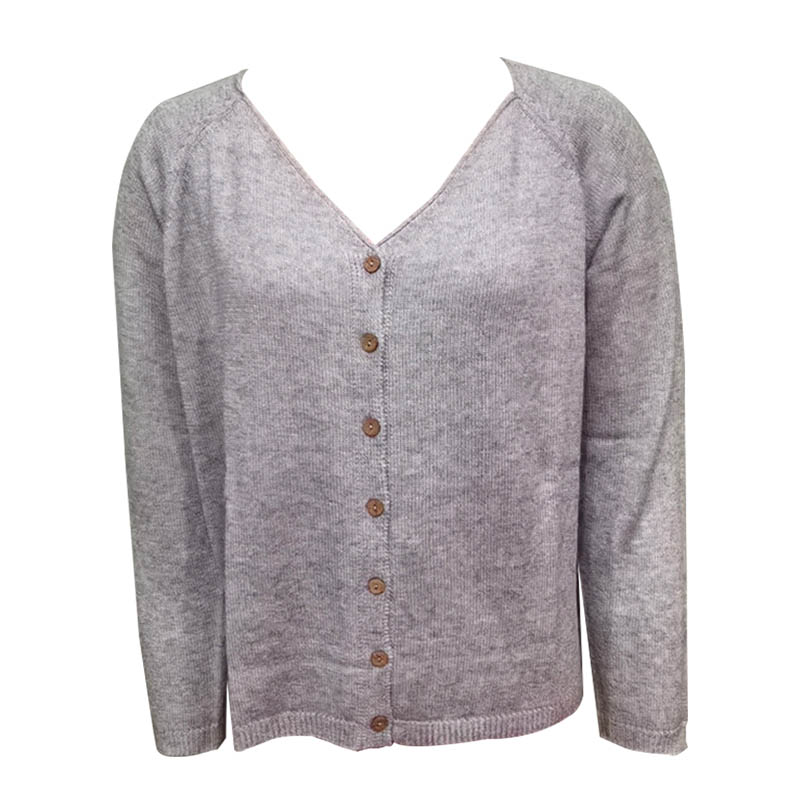
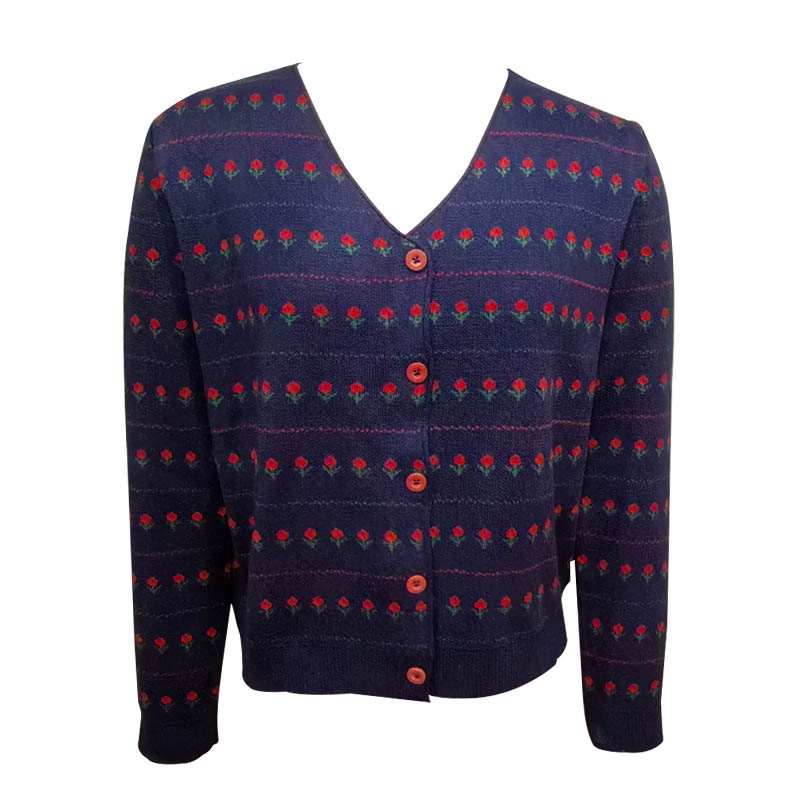
The knitting density of knitted cardigans is crucial for balancing warmth and lightness. It requires comprehensive consideration of multiple dimensions, including yarn characteristics, knitting structure, knitting density, finishing processes, and seasonal adaptability. Scientific design is essential to achieve a balance between functionality and aesthetics.
Yarn characteristics are fundamental to determining knitting density. Natural fibers like wool and cashmere, with their high crimp and abundant air pockets, trap still air to form an insulating layer, maintaining warmth even with lower knitting densities. Plant fibers like cotton and linen, on the other hand, require tighter knitting to enhance warmth. Summer knitted cardigans often use fine-count cotton blends with spandex, creating micro-gaps through loose knitting to ensure breathability while preventing stuffiness. Thicker winter versions tend to use high-count wool or cashmere, with tighter knitting to enhance windproofing. Yarn thickness directly affects knitting choice—coarser yarns are suitable for looser knitting with larger gauge, while finer yarns are suited for finer textures with smaller gauge. Both must be matched to the temperature and humidity requirements of the target season.
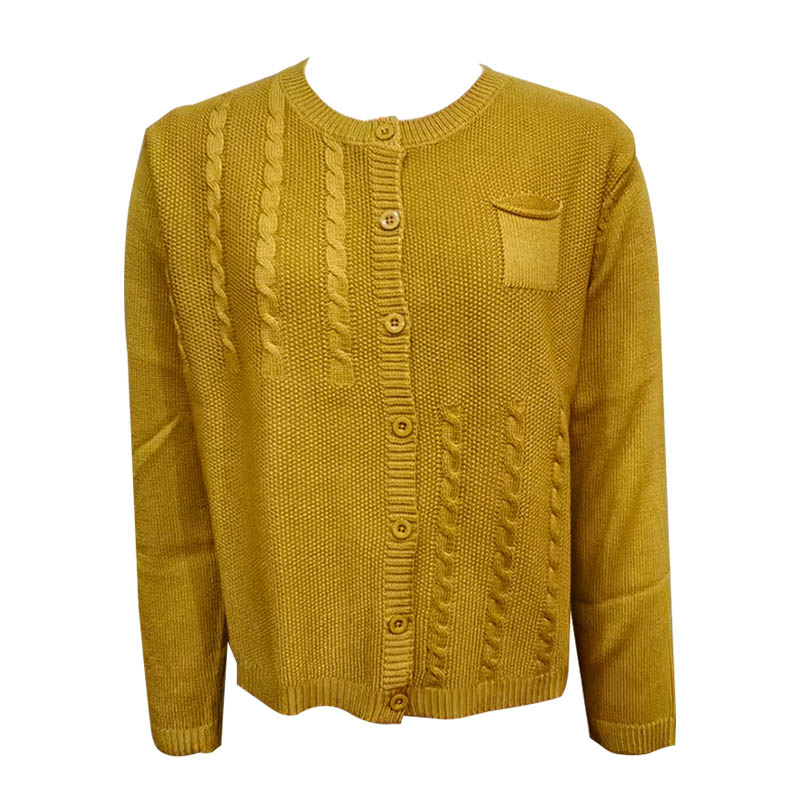
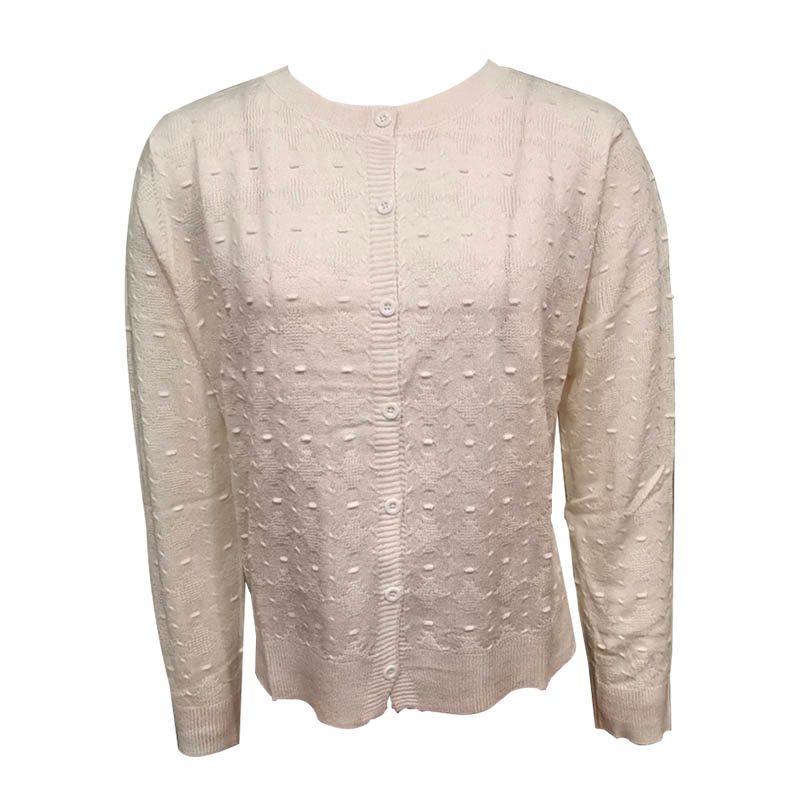
The knitting pattern has a significant impact on warmth and lightness. Ribbed knitting, through alternating knit and purl stitches, creates vertical grooves, increasing fabric elasticity and enhancing warmth through air pockets; it's commonly used in cuffs and hems. Plain knitting, with its tight structure, is suitable for windproof outer layers, but density must be controlled to avoid stiffness. Cable knitting and argan knitting, with their three-dimensional patterns, create air pockets through cross stitches, adding visual depth while providing better warmth than plain knitting. Summer cardigans can use openwork knitting to promote airflow, while winter styles require double knitting or linings to enhance warmth.
Knitting density must balance functionality and comfort. High-density knitting reduces heat convection, but excessive tightness leads to stiffness and reduced breathability; low-density knitting, while lightweight, may reduce windproofness due to excessive porosity. In actual knitting, a balance needs to be achieved by adjusting the ratio of stitches to rows. For example, a density of 16 stitches/inch maintains the fluffiness of wool while creating sufficient windproof layer, suitable for autumn and winter commuting. Summer cardigans, on the other hand, can have a density reduced to 12 stitches/inch, achieving a breathable feel through looser stitches. Furthermore, local density adjustments are crucial: areas prone to wind, such as the front and shoulders, can be denser, while cuffs and hems can be naturally gathered with rib stitches to reduce cold air intrusion.
Final finishing processes are vital to the final knit density. Fulling allows wool fibers to felt together, filling knit gaps and significantly improving warmth, but time and temperature must be controlled to avoid making the fabric too thick. Gentle washing softens the loops, making the knit structure more conform to the body's curves and enhancing wearing comfort. For blended fabrics, enzyme treatment can specifically dissolve some fibers, creating a microporous structure while maintaining density, balancing warmth and breathability. Furthermore, the finishing process fixes the knit pattern, preventing density changes due to wearing or washing, and extending the cardigan's lifespan.
Seasonal adaptability is the core principle of knit density design. Spring cardigans need to strike a balance between warmth and breathability, using medium-density plain knit with lightweight yarns; summer styles primarily use low-density openwork knits, providing a dual sense of lightness through visual and tactile appeal in high temperatures; autumn cardigans can enhance warmth through double-layer knitting or adding linings, while maintaining the openness of the outer knit to adapt to temperature changes; thick winter cardigans require a combination of high-density knitting and three-dimensional knitting to create a multi-layered insulating structure to withstand the cold.
Knit density control also needs to consider style and wearing occasion. Slim-fit cardigans need tight knitting to emphasize lines, while oversized styles can appropriately reduce density, using looser knitting to create a relaxed feel; commuting occasions emphasize windproofness and durability, suitable for medium to high-density knitting; casual occasions can try low-density openwork designs to add a touch of fashion. Furthermore, adjusting the density of details such as the neckline and placket can enhance the overall quality—a high-density ribbed neckline is both warm and resistant to deformation, while a low-density plain knit placket reduces bulkiness.
Controlling the knitting density in knitted cardigan is a comprehensive art, requiring the organic combination of yarn characteristics, knitting structure, knitting density, finishing processes, and seasonal needs. Through scientific design and meticulous craftsmanship, a perfect balance between warmth and lightness is achieved. Whether it's the breathable openwork design for spring and summer or the windproof, three-dimensional design for autumn and winter, every knitting detail embodies the ultimate pursuit of functionality and aesthetics.