


How to balance warmth and lightness in a layered look with a knitted cardigan?
Release Time : 2026-06-11
In a layered look, a knitted cardigan serves as both a basic insulating layer and an outer transition layer, while also maintaining a light and free-flowing overall style. Because knitted materials inherently possess good air-layering structure and a degree of elasticity, their warmth doesn't solely depend on thickness, but rather on yarn structure, weave density, and the control of airflow between layers.
1. Achieving Lightweight Warmth Through Yarn Structure Optimization
The warmth of a knitted cardigan primarily comes from the yarn's loft and air-locking ability. Without increasing weight, using hollow fibers, blended wool, or high-elastic polyester fibers creates more static air layers within the fibers, thus improving thermal resistance. Simultaneously, the combination of fine yarns and high-twist yarns enhances fabric structural stability while maintaining a lightweight feel, allowing the cardigan to provide basic warmth while retaining its soft drape. This "lightweight yet highly insulating" material approach is one of the core methods for balancing weight and function.
2. Dynamic Balance Between Weave Density and Breathability
The warmth of a knitted cardigan depends not only on the material but also closely on the fabric density. While high-density weaves effectively reduce cold air penetration, they can also reduce breathability, leading to a stuffy feeling. Conversely, low-density weaves, while lighter, offer insufficient insulation. Therefore, design often employs zoned density control, such as increasing the weave density in the core chest and back areas while maintaining higher breathability in the armpits and side seams, to achieve a dynamic balance between heat retention and airflow. This structural adjustment allows the cardigan to adapt more flexibly to different body sensations.
3. The Effect of Layering on Weight Adjustment
In a multi-layered layering system, a knitted cardigan typically sits between the inner layer and the outer layer, functioning more as a "buffer layer." By strategically layering it with thin underwear or shirts, the cardigan's reliance on heavy outerwear can be reduced, thus avoiding an overall bulky look. Meanwhile, choosing a lightweight windbreaker or softshell jacket as the outer layer reduces the excessive reliance on the knitted layer's warmth, allowing it to focus more on temperature regulation and style transition. This layered, weight-reducing design achieves overall warmth without increasing the thickness of individual garments.
4. Visual Control of Lightness Through Fabric Structure
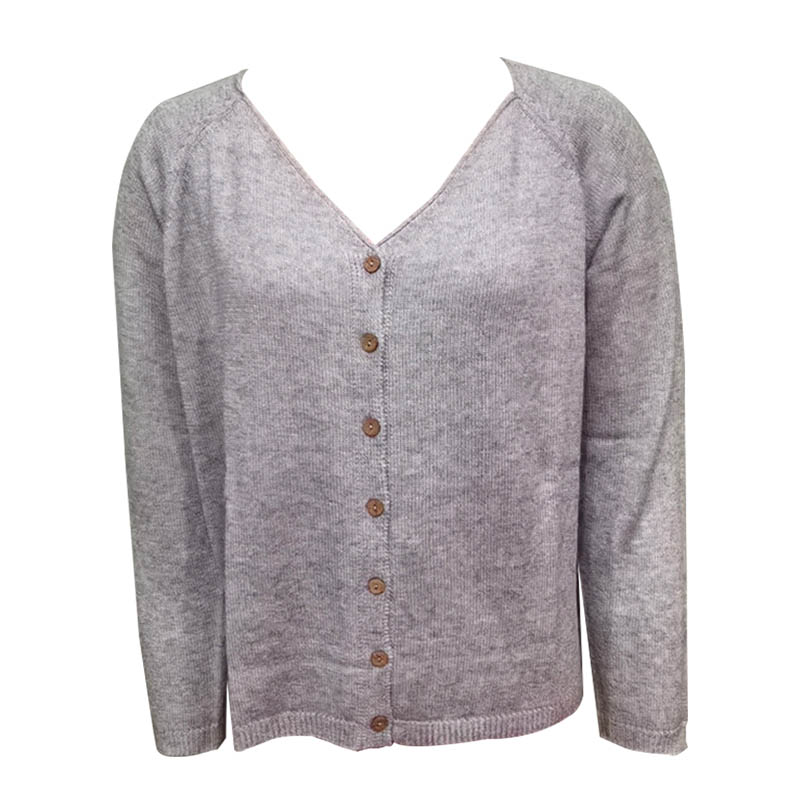
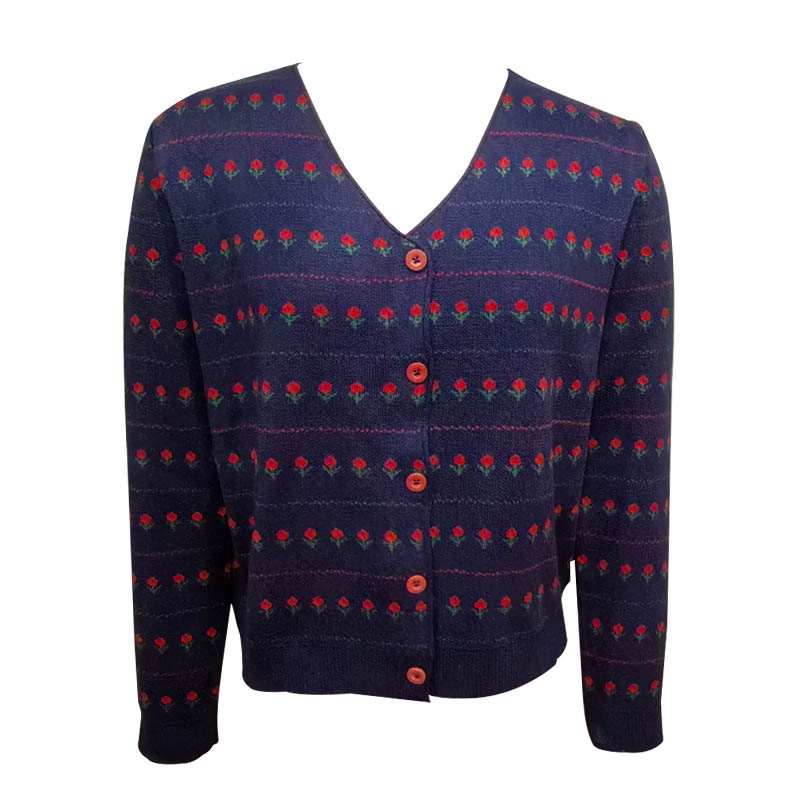
Besides actual warmth, visual lightness is equally important. Knitted cardigans, with their V-neck design, dropped shoulders, and moderately loose silhouette, reduce the feeling of constriction without sacrificing warmth. Fine stripes or low-contrast color schemes also reduce visual heaviness, making the overall look lighter. In actual wear, this dual optimization of "structural lightness + visual lightness" allows knitted cardigans to meet the warmth needs of autumn and winter without disrupting the fluidity of the overall layering.
In summary, the balance of knitted cardigan jackets in a layered system is essentially the result of the synergistic optimization of material properties, fabric structure, and design. By making fine adjustments to the yarn, density, and design, the basic warmth retention can be maintained while minimizing the burden of wearing the garment, thus achieving a lightweight and warm wearing experience.
1. Achieving Lightweight Warmth Through Yarn Structure Optimization
The warmth of a knitted cardigan primarily comes from the yarn's loft and air-locking ability. Without increasing weight, using hollow fibers, blended wool, or high-elastic polyester fibers creates more static air layers within the fibers, thus improving thermal resistance. Simultaneously, the combination of fine yarns and high-twist yarns enhances fabric structural stability while maintaining a lightweight feel, allowing the cardigan to provide basic warmth while retaining its soft drape. This "lightweight yet highly insulating" material approach is one of the core methods for balancing weight and function.
2. Dynamic Balance Between Weave Density and Breathability
The warmth of a knitted cardigan depends not only on the material but also closely on the fabric density. While high-density weaves effectively reduce cold air penetration, they can also reduce breathability, leading to a stuffy feeling. Conversely, low-density weaves, while lighter, offer insufficient insulation. Therefore, design often employs zoned density control, such as increasing the weave density in the core chest and back areas while maintaining higher breathability in the armpits and side seams, to achieve a dynamic balance between heat retention and airflow. This structural adjustment allows the cardigan to adapt more flexibly to different body sensations.
3. The Effect of Layering on Weight Adjustment
In a multi-layered layering system, a knitted cardigan typically sits between the inner layer and the outer layer, functioning more as a "buffer layer." By strategically layering it with thin underwear or shirts, the cardigan's reliance on heavy outerwear can be reduced, thus avoiding an overall bulky look. Meanwhile, choosing a lightweight windbreaker or softshell jacket as the outer layer reduces the excessive reliance on the knitted layer's warmth, allowing it to focus more on temperature regulation and style transition. This layered, weight-reducing design achieves overall warmth without increasing the thickness of individual garments.
4. Visual Control of Lightness Through Fabric Structure
Besides actual warmth, visual lightness is equally important. Knitted cardigans, with their V-neck design, dropped shoulders, and moderately loose silhouette, reduce the feeling of constriction without sacrificing warmth. Fine stripes or low-contrast color schemes also reduce visual heaviness, making the overall look lighter. In actual wear, this dual optimization of "structural lightness + visual lightness" allows knitted cardigans to meet the warmth needs of autumn and winter without disrupting the fluidity of the overall layering.
In summary, the balance of knitted cardigan jackets in a layered system is essentially the result of the synergistic optimization of material properties, fabric structure, and design. By making fine adjustments to the yarn, density, and design, the basic warmth retention can be maintained while minimizing the burden of wearing the garment, thus achieving a lightweight and warm wearing experience.