


How does a knitted cardigan, with its soft fabric, offer comfort and warmth for all four seasons?
Release Time : 2026-01-26
In the ever-changing world of wardrobes, some pieces are destined to be timeless companions—they don't chase fleeting trends, yet they can be draped over the shoulders in the chill of spring, lightly wrapped around the body on cool summer nights, layered over shirts in the autumn breeze, and even used as an inner layer in winter for added warmth. A knitted cardigan is precisely such a garment, combining function and artistry. Using natural or blended yarns as its brush and knitting techniques as its language, it weaves a soft, breathable, and draping experience between the warp and weft, becoming an indispensable, gentle armor in modern everyday wear.
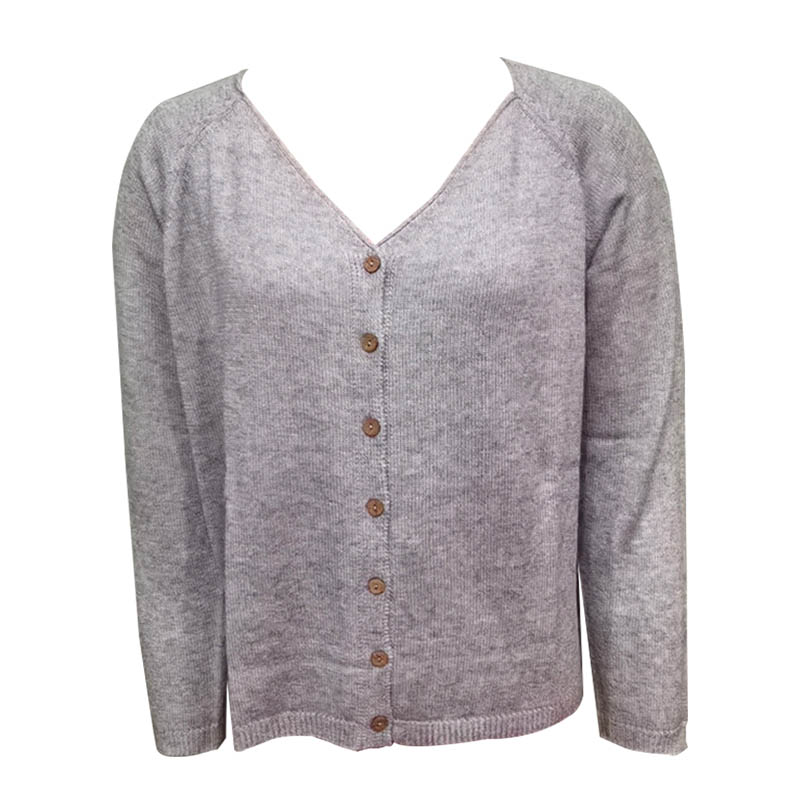
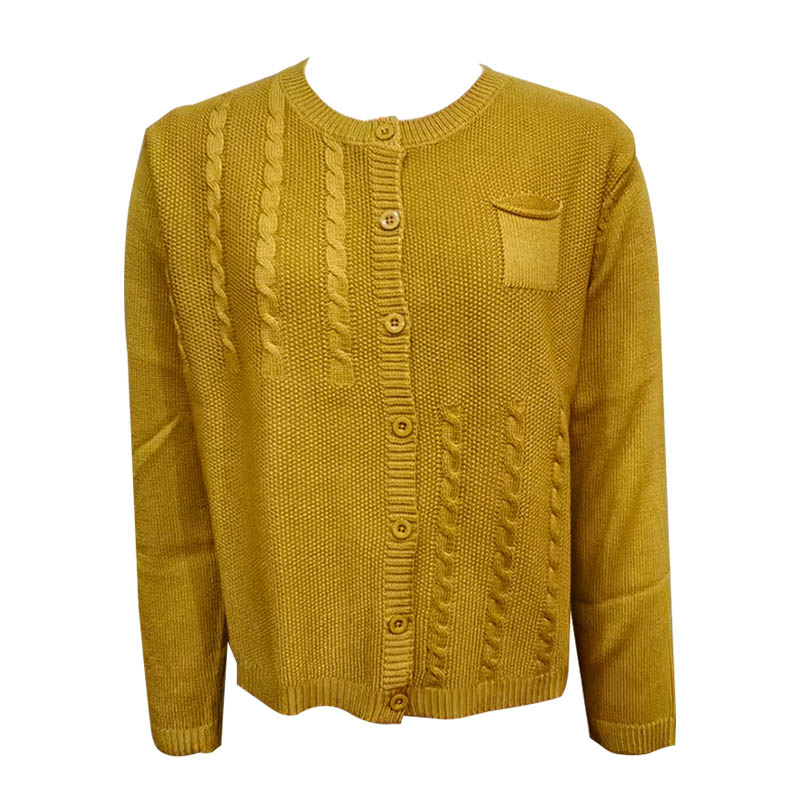
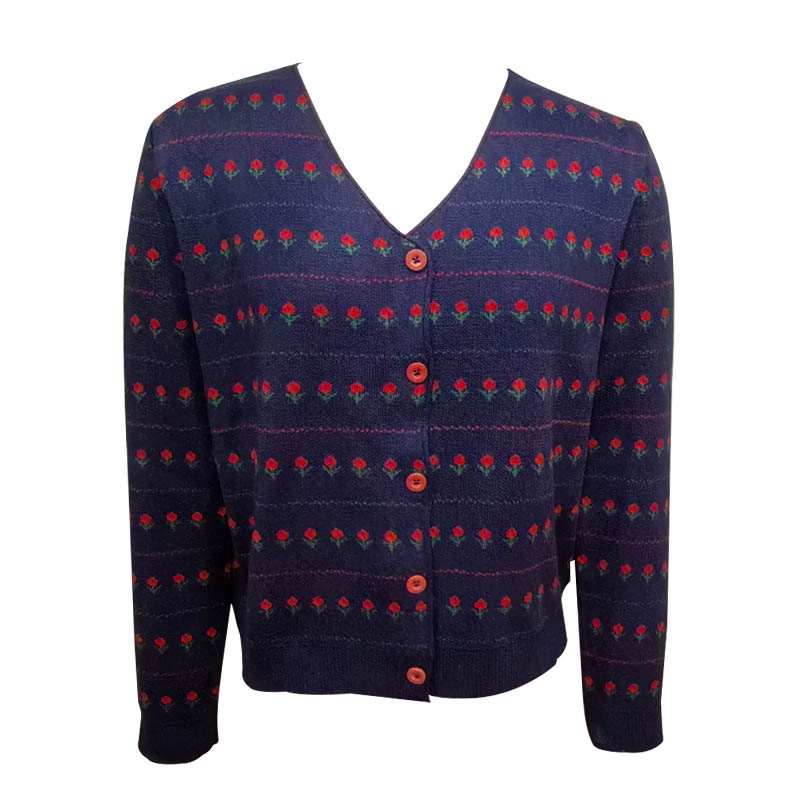
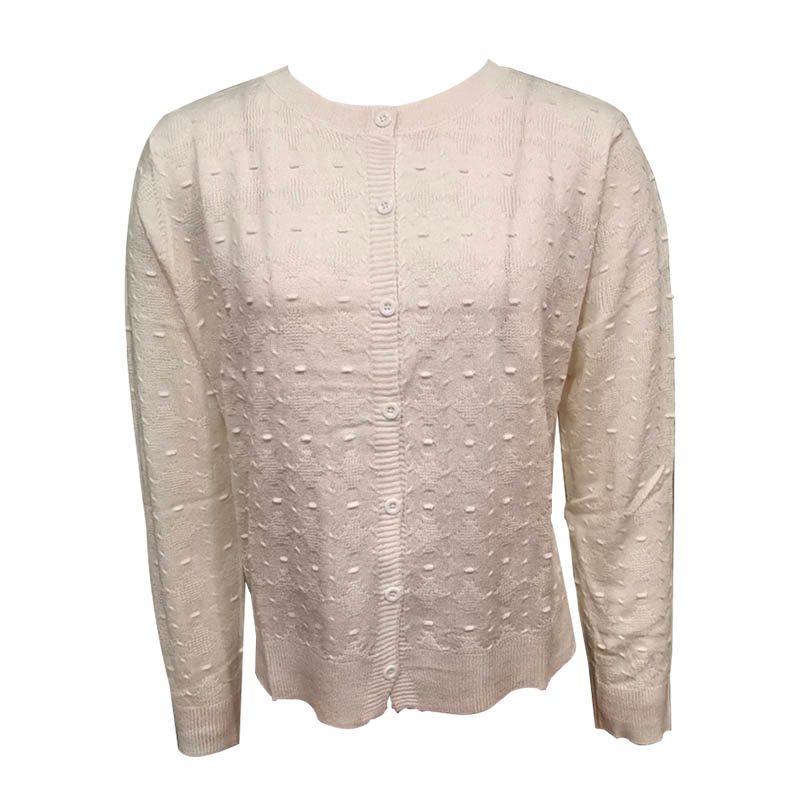
Its charm stems first and foremost from the skin-friendly texture imparted by the materials and craftsmanship. High-quality knitted cardigans often use cotton, wool, cashmere, or high-quality recycled fibers, offering a delicate and warm touch, without any itching when worn against the skin. The yarn undergoes combing and twisting treatments, preserving the breathability of natural fibers while enhancing the fabric's anti-pilling and durability. Different knitting structures—such as the simplicity of plain knit, the elasticity of rib, the three-dimensionality of cable knit, or the lightness of openwork—not only create rich textural layers but also determine the cardigan's drape, resilience, and warmth. A good cardigan feels like a second skin, flowing naturally and unrestrainedly with the body.
More importantly, the design is restrained and inclusive. Classic cardigans often feature smooth lines and minimal embellishment, with buttons, ties, or the opening itself forming the visual focus. This minimalist silhouette makes it highly versatile: paired with a white T-shirt and jeans, it creates a relaxed urban style; with a dress, it instantly injects a gentle, artistic vibe; layered with a blazer, it exudes a touch of casualness within formality. Whether commuting, dating, at home, or on a short trip, it blends seamlessly into any setting, subtly enhancing the overall look without being overpowering. Practicality is equally important. The cardigan's open-front design gives the wearer great freedom—button it up for warmth when it's cold, leave it open for ventilation when it's warm, and flexibly regulate body temperature without having to remove it. Longer versions can be worn as lightweight outerwear, while shorter versions offer a sharp and sophisticated look; looser fits emphasize comfort and casualness, while tailored cuts accentuate the figure. Some designs also incorporate details such as slip pockets, adjustable cuffs, or non-slip shoulder seams, balancing aesthetics and functionality. Especially in air-conditioned rooms, during periods of significant temperature differences between day and night, or during seasonal transitions, a knitted cardigan is the most thoughtful and convenient personal shield.
Furthermore, sustainability and emotional value are increasingly prominent. Compared to fast fashion items, a well-crafted knitted cardigan stands the test of time. Even after many years, slight wear and tear can be repaired, dyed, or repurposed to give it a new lease on life. It records the wearer's daily journey—coffee stains, creases in book pages, the faint scent of milk left by a child's snuggle—these marks are not flaws, but rather authentic imprints of life. This is why many people cherish a cardigan from their mother, grandmother, or a bygone era; it transcends mere clothing to become a vessel for emotions.
Ultimately, the significance of a knitted cardigan lies not in its fashionable appeal, but in its ability to respond to life's ever-changing nature with its softness. It is unrestricted and understated, yet always provides just the right amount of warmth and dignity when needed.
Because in the philosophy of ideal clothing, the best coat is the one you can easily grab and go out with peace of mind. And that knitted cardigan quietly hanging on the back of a chair or at the foot of the bed is the gentlest yet most steadfast companion to this composure.
Its charm stems first and foremost from the skin-friendly texture imparted by the materials and craftsmanship. High-quality knitted cardigans often use cotton, wool, cashmere, or high-quality recycled fibers, offering a delicate and warm touch, without any itching when worn against the skin. The yarn undergoes combing and twisting treatments, preserving the breathability of natural fibers while enhancing the fabric's anti-pilling and durability. Different knitting structures—such as the simplicity of plain knit, the elasticity of rib, the three-dimensionality of cable knit, or the lightness of openwork—not only create rich textural layers but also determine the cardigan's drape, resilience, and warmth. A good cardigan feels like a second skin, flowing naturally and unrestrainedly with the body.
More importantly, the design is restrained and inclusive. Classic cardigans often feature smooth lines and minimal embellishment, with buttons, ties, or the opening itself forming the visual focus. This minimalist silhouette makes it highly versatile: paired with a white T-shirt and jeans, it creates a relaxed urban style; with a dress, it instantly injects a gentle, artistic vibe; layered with a blazer, it exudes a touch of casualness within formality. Whether commuting, dating, at home, or on a short trip, it blends seamlessly into any setting, subtly enhancing the overall look without being overpowering. Practicality is equally important. The cardigan's open-front design gives the wearer great freedom—button it up for warmth when it's cold, leave it open for ventilation when it's warm, and flexibly regulate body temperature without having to remove it. Longer versions can be worn as lightweight outerwear, while shorter versions offer a sharp and sophisticated look; looser fits emphasize comfort and casualness, while tailored cuts accentuate the figure. Some designs also incorporate details such as slip pockets, adjustable cuffs, or non-slip shoulder seams, balancing aesthetics and functionality. Especially in air-conditioned rooms, during periods of significant temperature differences between day and night, or during seasonal transitions, a knitted cardigan is the most thoughtful and convenient personal shield.
Furthermore, sustainability and emotional value are increasingly prominent. Compared to fast fashion items, a well-crafted knitted cardigan stands the test of time. Even after many years, slight wear and tear can be repaired, dyed, or repurposed to give it a new lease on life. It records the wearer's daily journey—coffee stains, creases in book pages, the faint scent of milk left by a child's snuggle—these marks are not flaws, but rather authentic imprints of life. This is why many people cherish a cardigan from their mother, grandmother, or a bygone era; it transcends mere clothing to become a vessel for emotions.
Ultimately, the significance of a knitted cardigan lies not in its fashionable appeal, but in its ability to respond to life's ever-changing nature with its softness. It is unrestricted and understated, yet always provides just the right amount of warmth and dignity when needed.
Because in the philosophy of ideal clothing, the best coat is the one you can easily grab and go out with peace of mind. And that knitted cardigan quietly hanging on the back of a chair or at the foot of the bed is the gentlest yet most steadfast companion to this composure.